We have talked about conjugate heat transfer in a recent post. In this post, we will look at a similar example and perform a steady-state thermal analysis on a copper heat exchanger as shown in Figure 1.
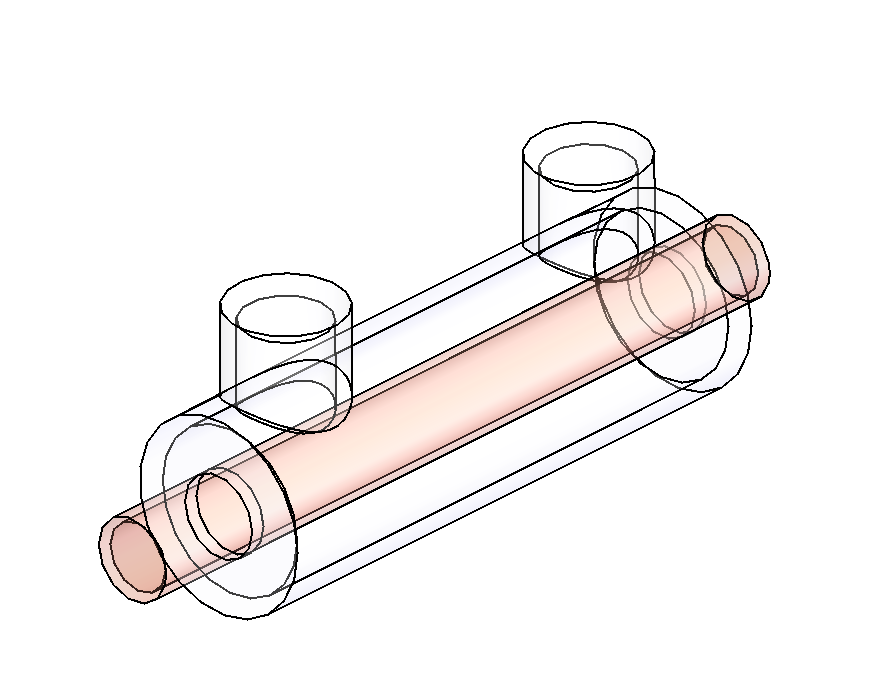
Figure 1. Heat exchanger (transparent mode).
The heat exchanger is used to transfer heat between air and water. 450K of hot air enters the heat exchanger (at the inlet indicated in Figure 2) at a rate of 0.15 kg/s. Water is pushed through the heat exchanger at a rate of 0.1 kg/s. The objective of this simulation is to obtain the temperature profile in both media.
Due to symmetry, only 1/2 model is needed to investigate the flow, thus the computation domain has been defined using half of the model. This has also been reflected in Figure 2.
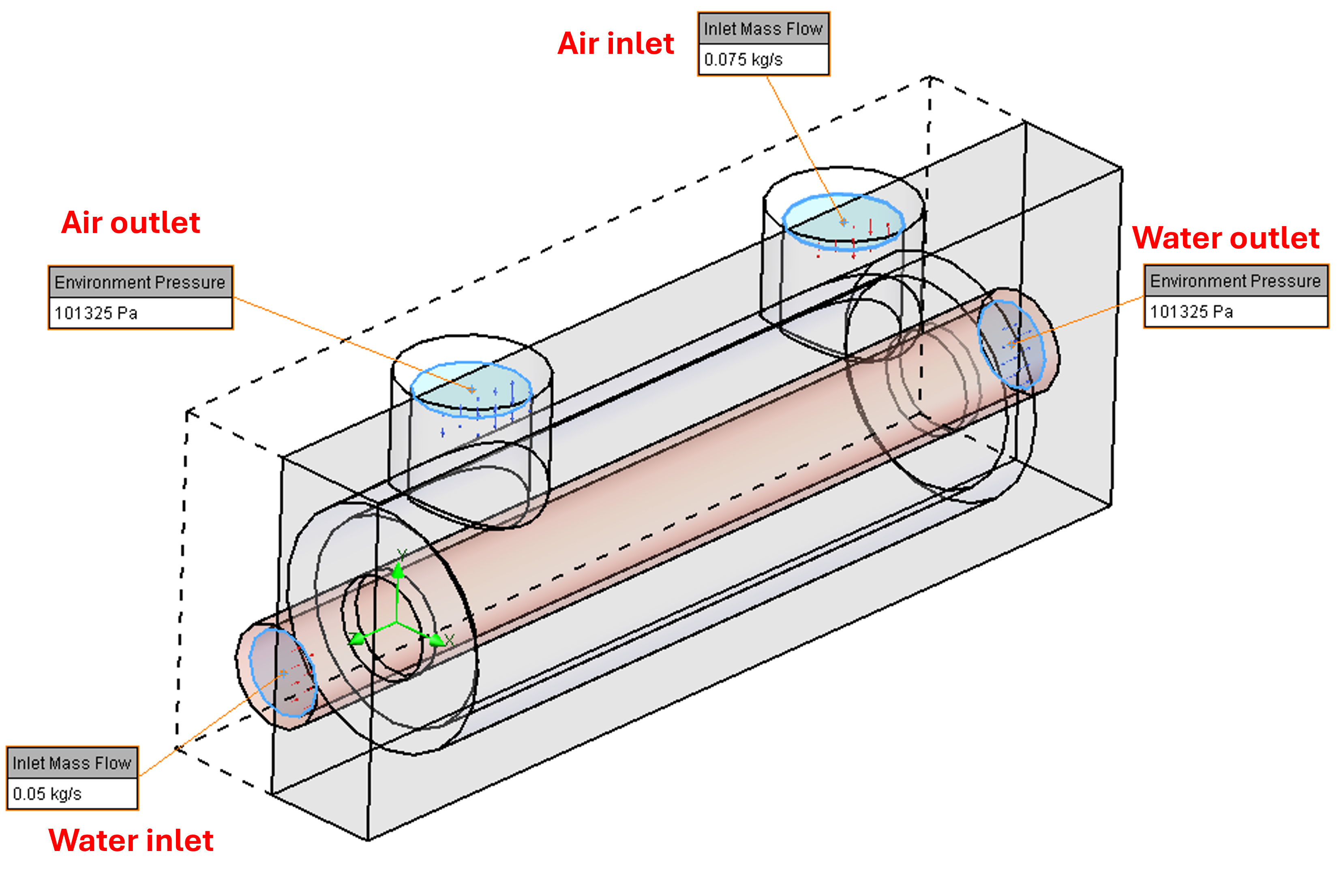
Figure 2. Boundary conditions.
Conjugate heat transfer is the combination of convection and conduction heat exchange. By default, SOLIDWORKS Flow Simulation considers the heat transfer due to convection within a fluid, however, it will not consider conduction through solids. This option must be selected when defining the simulation using the Wizard. Similar to the previous post, the general settings for analysis type and fluids are shown in Figure 3 and Figure 4, respectively.
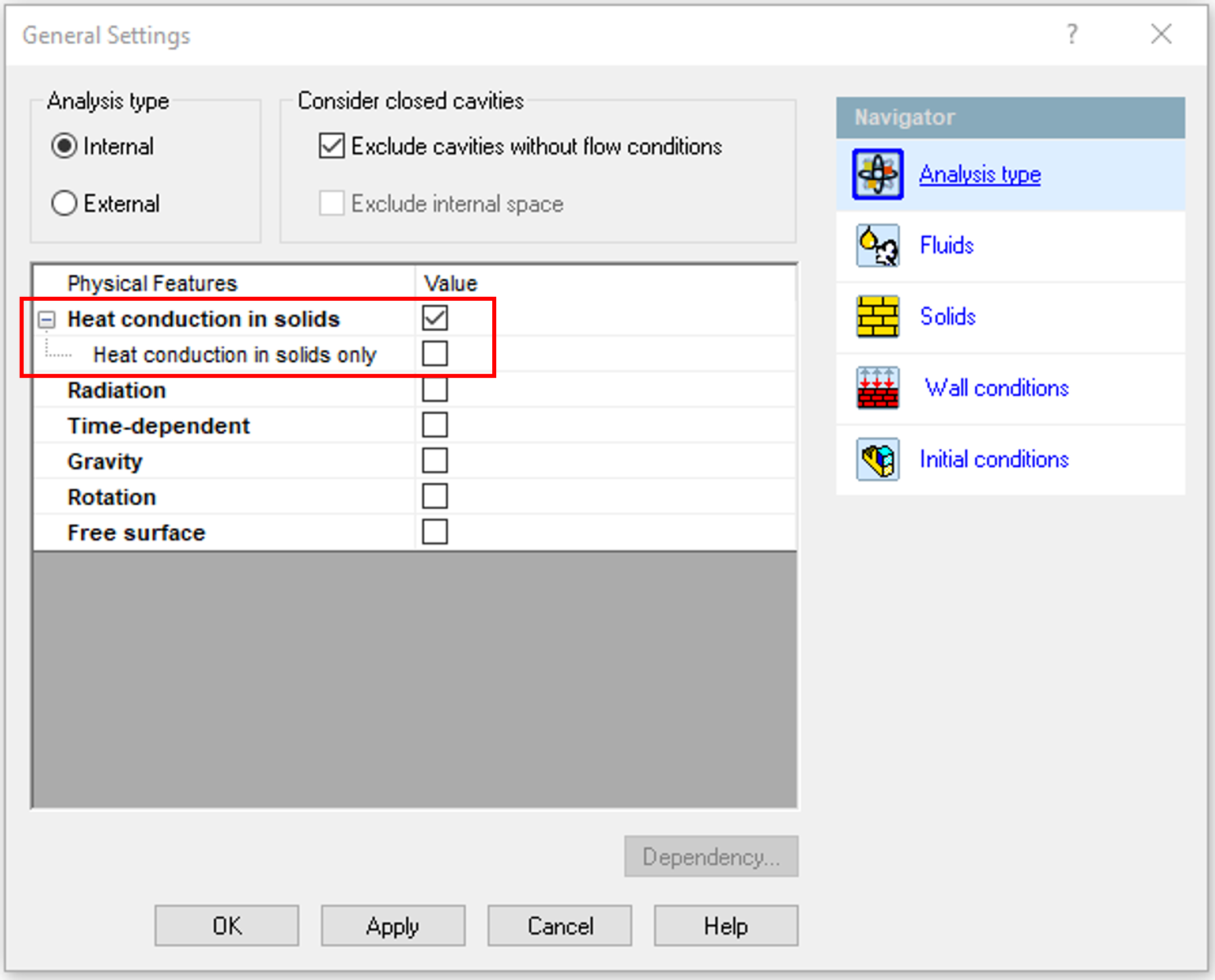
Figure 3. Settings for analysis type.
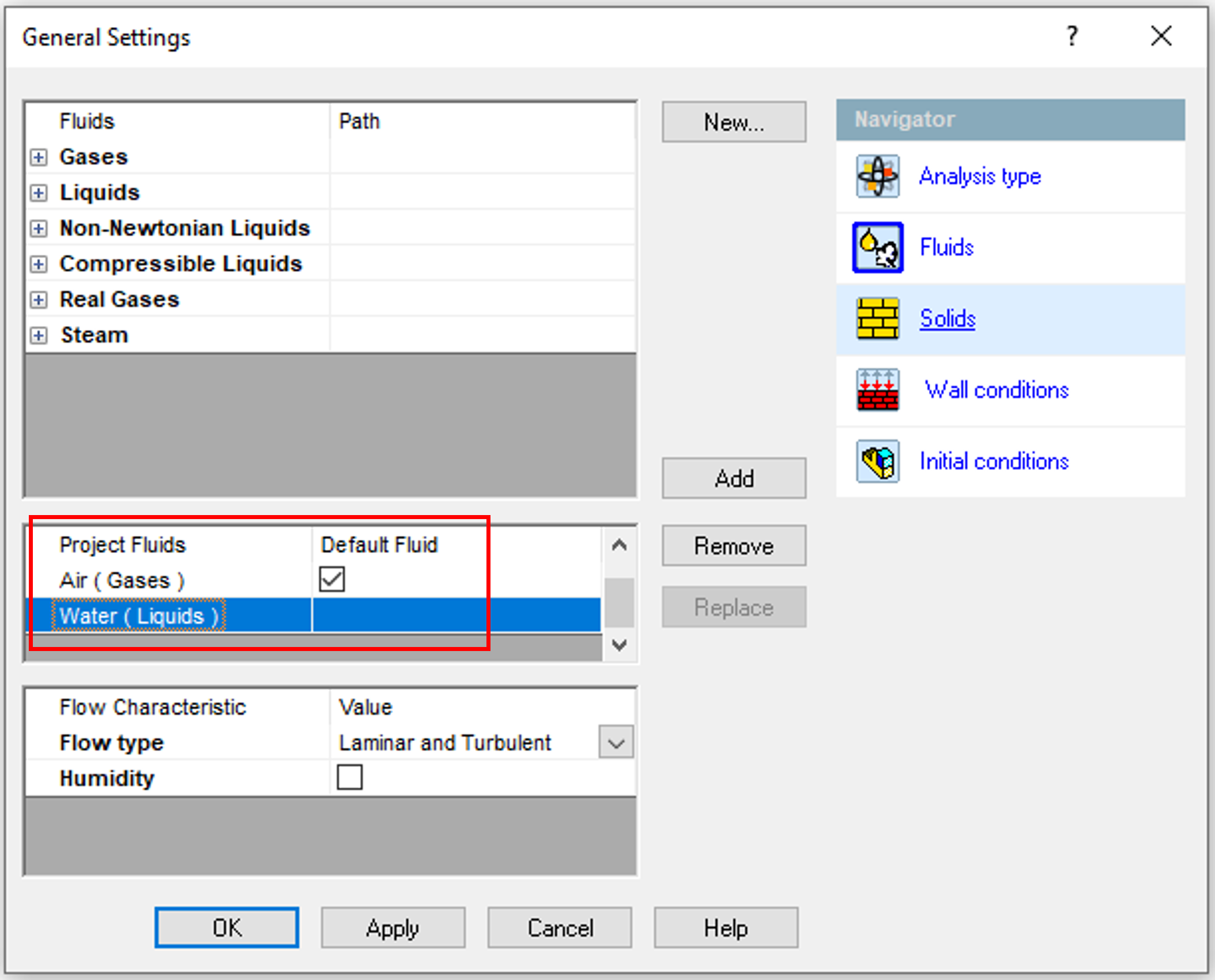
Figure 4. Settings for fluids.
Although two fluids have been defined in the wizard, Flow Simulation needs to be told where these liquids flow through the model. Thus, Fluid Subdomains must be created. The two subdomains must be independent and must not have any mixing.
After running the simulation, the temperature cut plot on the Right Plane is shown in Figure 5.
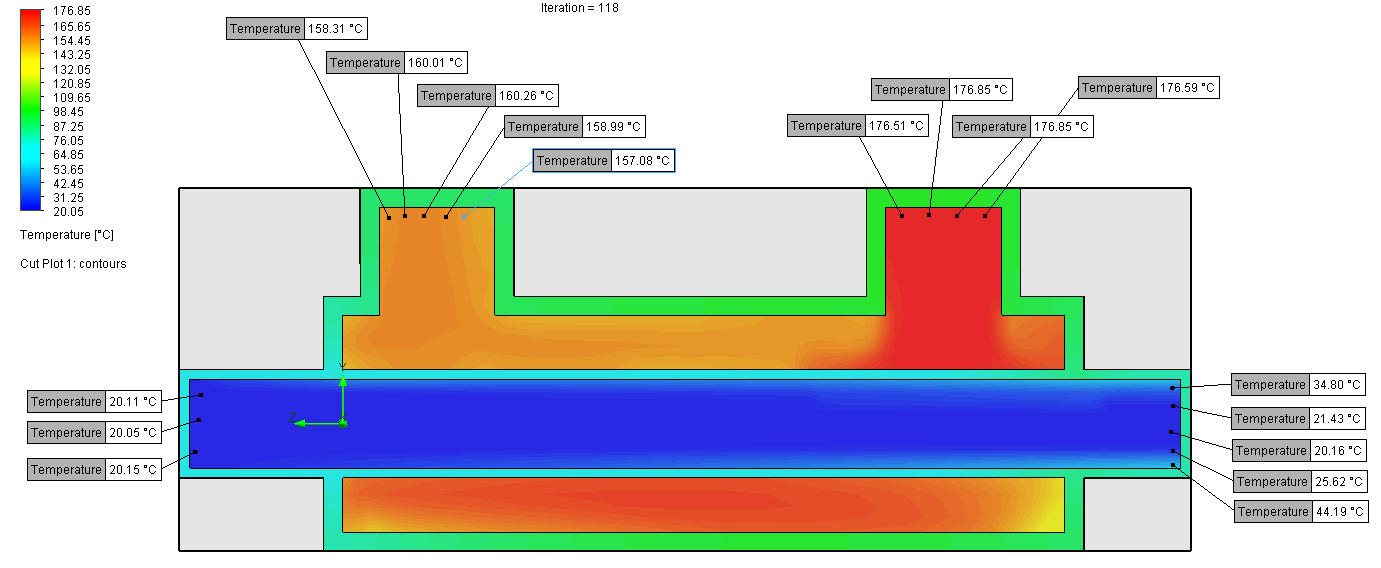
Figure 5. Temperature cut plot.
The temperature on the outlet face of water is evaluated using Surface Parameters in the post-processor as shown in Figure 6.

Figure 6. Temperature on water outlet face.
In the end, the goal plot showing the water outlet average temperature versus iterations is shown in Figure 7.

Figure 7. The goal plot of water outlet average temperature.
 Xutao Sun